
Regenexx® Procedures for Foot & Ankle Conditions.
Regenexx® regenerative orthopedic procedures are non-surgical injection-based procedures for people suffering from foot and ankle injuries, arthritis, or other conditions that cause pain. These procedures utilize concentrated repair cells that are obtained from your own bone marrow or blood to promote your body’s own natural ability to heal.
Current surgical treatment options for common ankle injuries and arthritis, include ankle arthroscopy to “clean up” damaged cartilage, fusion of ankle bones where cartilage has been lost, and tendon grafts screwed in place to strengthen loose connections between bones. All are painful and are often not be effective in the long run. These surgeries typically involve a painful post-surgical recovery with a lengthy rehab period to restore strength and mobility to the ankle. Regenexx may help reduce pain and improve function for those with foot or ankle pain due to injury or arthritis eliminating the need for these invasive surgeries.
Commonly Treated Ankle & Foot Conditions
This is not a complete list, so please contact us or complete the Regenexx Candidate Form if you have questions about whether you or your condition can be treated with these non-surgical procedures.
- Arthritis
- Ankle Instability
- Peroneal tendon tear or split
- Ankle ligament sprain or tear
- Sub-talar arthritis or instability
- Tarsal tunnel syndrome
- Plantar fasciitis
- Bunions
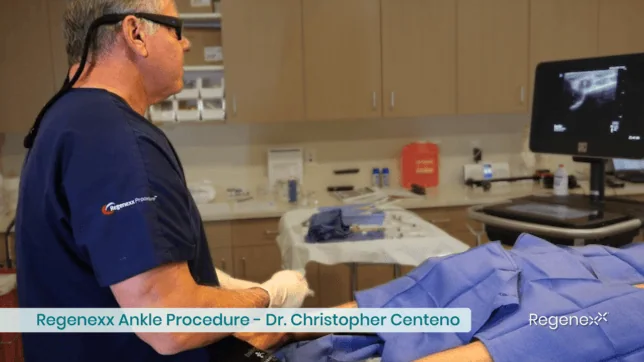
Video: Watch a Regenexx Image-Guided Ankle Injection Procedure
Considering Ankle Surgery, Fusion or Replacement?
As an alternative to surgery and the long recuperative period involved, tears to Foot and Ankle tendons and ligaments and Ankle Arthritis can often be treated with the healing agents from your own body, promoting your body’s ability to do its natural job of healing.
Regenexx Procedures may help alleviate pain and improve function with a highly specialized, non-surgical, precise image-guided injection procedure. Patients are often encouraged to walk the same day, and most experience little downtime from the procedure.
Ankle Ligament Tears, Sprains and Instability
When the ligaments that hold the bones of the ankle joint together are partially torn or stretched, as in the case of a bad sprain or repeated minor sprains, they can become painful, loose, and weak. This changes how you walk, putting painful stress on other joints of the foot, as well as making it more likely that you will sprain the ankle again. This leads to a cycle of chronic pain and instability.